Framing Textiles: Turning Scarves and Fabrics into Timeless Wall Art
Scarves occupy a unique space between fashion and fine art. A beautifully designed scarf can carry personal meaning, cultural history, and remarkable craftsmanship. Framing textiles is one of our specialties at Capricorn Framing, and framing scarves in particular allows us to preserve wearable art while transforming it into a striking visual centerpiece for the home.
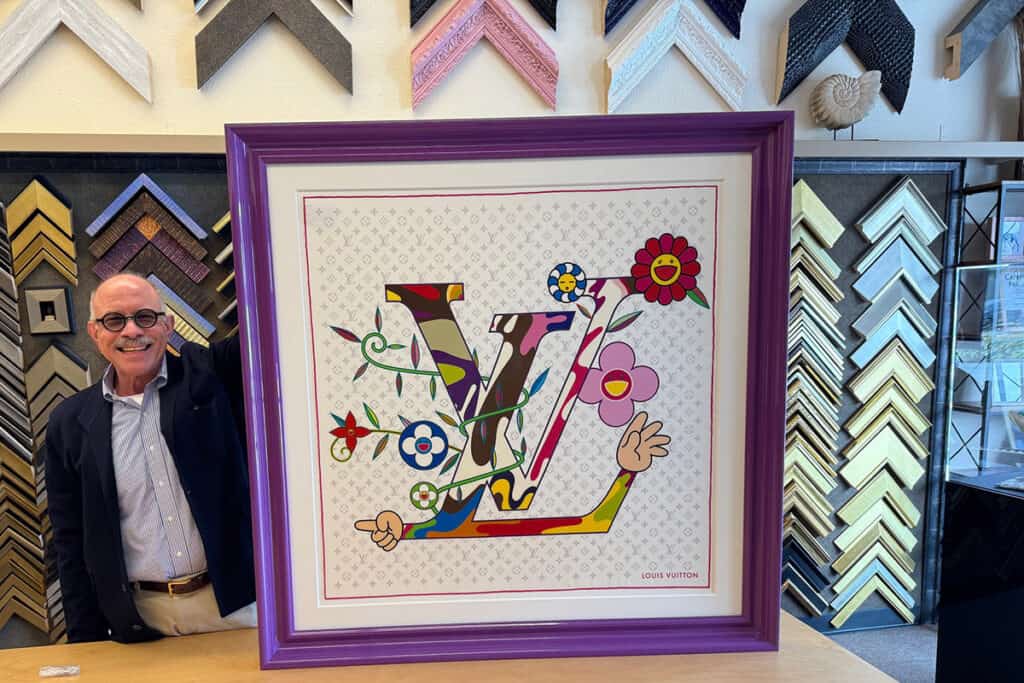
Many of the scarves we frame are far more than accessories. Antique Hermès scarves, limited-edition designs, or pieces passed down through generations often arrive with stories attached. Many clients come to us with scarves that mark milestones: a cherished gift, a beloved collection, or a treasured piece inherited from a family member. Custom framing allows these textiles to move beyond storage and into a space where their beauty and story can be fully appreciated.
Why Frame a Scarf?
Scarves are designed to be seen. Their intricate illustrations, bold color palettes, and rhythmic patterns are often lost when folded away in drawers. Custom framing elevates the scarf to its rightful place as visual art, while also protecting it from light damage, dust, and handling.
Antique and luxury scarves—such as vintage Hermès pieces—benefit especially from custom framing. These textiles were often produced in limited runs and printed using techniques that deserve museum-level care. Even contemporary scarves can hold tremendous personal or artistic value, making preservation just as important as presentation.
When Framing Scarves, Conservation is Essential
When custom framing any textile, conservation is always our top priority. We never use adhesives on textiles. Instead, scarves are carefully hand-stitched to a fabric-covered support—most often a fabric mat—using techniques that provide stability without stressing the fibers. This approach allows the scarf to lie flat and secure while remaining fully reversible, preserving both its condition and its value. Linen and silk mats are chosen not only for their archival qualities, but also for their subtle texture, which complements silk and other fine fabrics beautifully.
Glazing is equally important. We frequently use Optium Museum Acrylic by Tru Vue, which is light weight and offers exceptional clarity, anti-reflective properties, and UV protection. This ensures that intricate patterns, saturated colors, and delicate details remain vivid while the textile is shielded from harmful light exposure.
Design Considerations in Framing Textiles
The scarf itself sets the tone. Color, pattern, scale, and provenance all influence the design choices that follow. With iconic scarves—such as antique Hermès pieces—our goal is often to elevate the textile while maintaining a sense of balance and restraint.
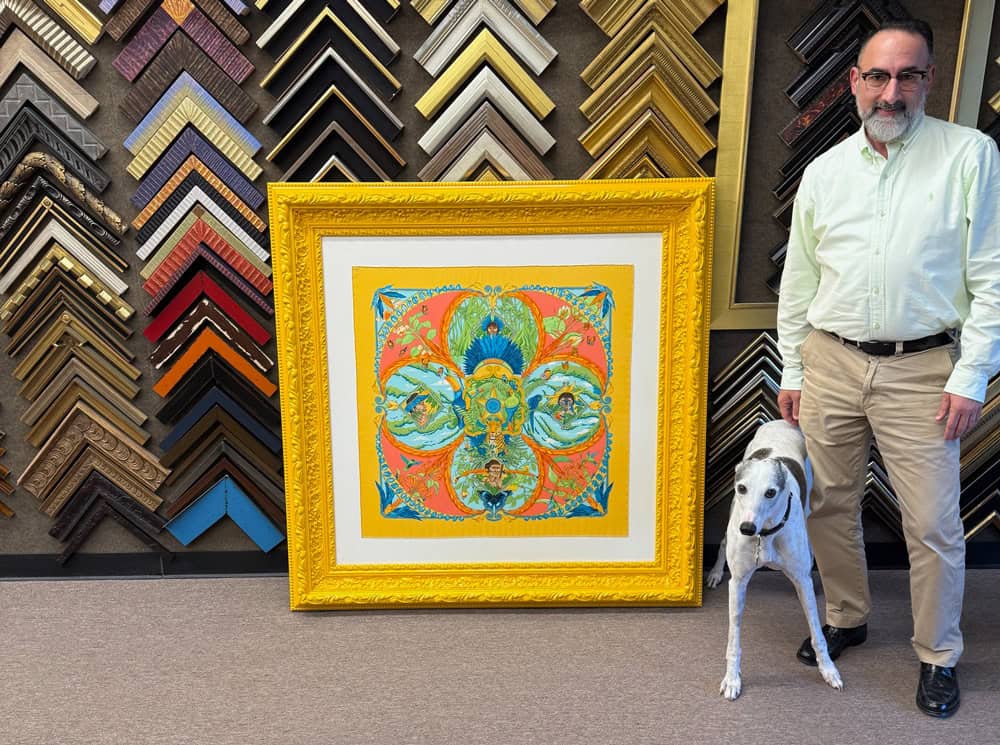
Frame selection plays a crucial role. A 22kt gold-under-black gallery frame can add depth and formality to a richly colored scarf, while a bright yellow frame might give a large-scale piece a bold, contemporary presence. Mouldings from trusted partners allow us to tailor each frame to the character of the textile and the client’s space.
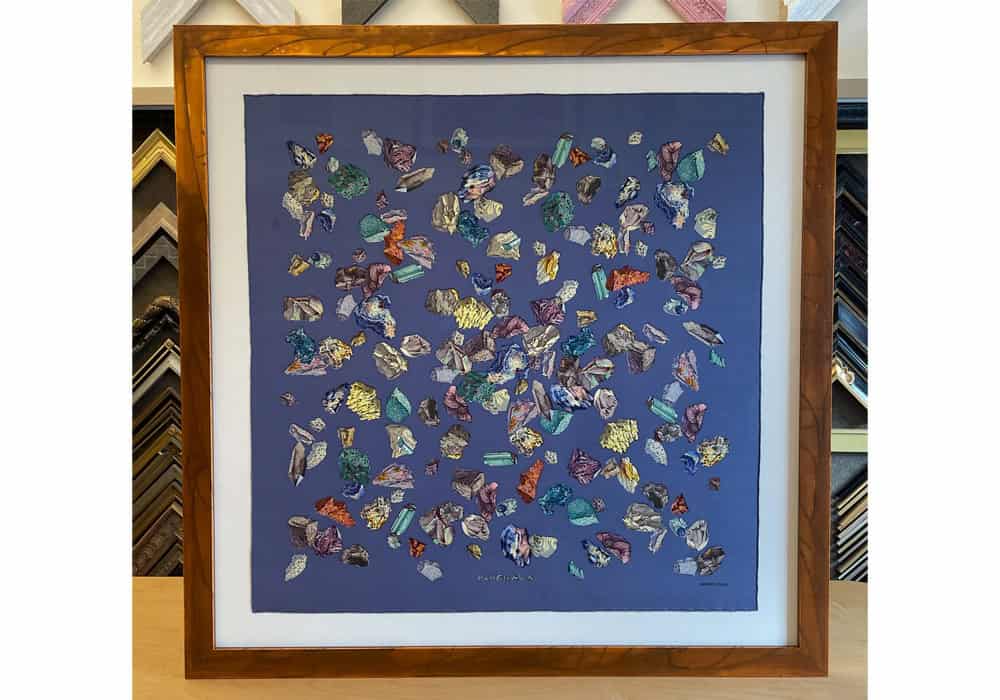
Matting is typically kept minimal but intentional. A linen mat not only complements the natural quality of the fabric but also provides a stable foundation for stitching. The subtle texture of linen enhances the presentation without competing with the scarf’s design.
Scale is another important consideration. Many scarves—especially classic silk squares—are substantial in size. Framing them allows their full dimensions to be appreciated, turning a once-wearable object into a statement artwork. Large pieces, such as scarves measuring 35 x 35 inches, command attention and benefit from thoughtful proportion and strong framing choices.
Beyond Scarves: Framing Textiles of All Kinds
While scarves are among the most frequently framed textiles in our studio, the same principles apply to a wide range of fabric-based works. Embroideries, needlepoint, rugs, flags, garments, samplers, sports jerseys, and ceremonial textiles all require specialized handling and mounting techniques.
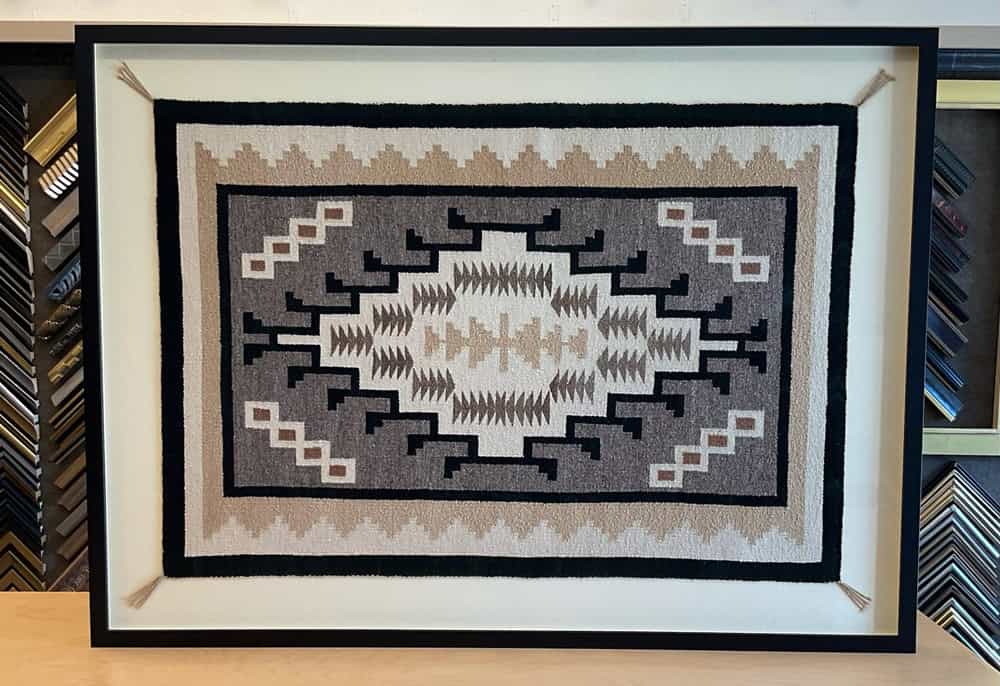
Custom framing is a collaborative experience. Clients often arrive with a vision, a story, or simply a desire to see their textile honored properly. Our role is to translate that into a finished piece that feels both personal and timeless.
Some projects are deeply sentimental, such as framing a late loved one’s prized scarf as a memorial piece. Others are part of a larger collection, where consistency across multiple framed textiles matters. In each case, we take the time to understand the context and guide clients through design options that best serve the textile and their space.
If you’re considering framing a scarf or other textile, we invite you to visit our San Francisco custom framing store to explore the possibilities.