How We Frame Medium to Large 3D Objects
While paintings, prints, and photographs are the backbone of custom framing, three-dimensional objects carry a different kind of story. They hold presence, memory, and meaning in a way that demands thoughtful presentation. Thinking beyond traditional artwork like this can make things especially interesting, because it becomes both an artistic and a technical craft.

A signed basketball is a perfect example of a medium-sized object that deserves more than a shelf. Autographs fade, surfaces collect dust, and the significance of the piece can get lost in everyday surroundings. By enclosing it in a custom acrylic case, we transformed it into a preserved, gallery-worthy focal point.
For pieces like this, we carefully consider:
- Visibility from multiple angles: Clear acrylic vitrines allow the object to be appreciated from all sides without visual obstruction.
- Support and stability: Internal mounts are discreetly designed to cradle the ball securely without putting pressure on the surface or signature.
- UV protection: Acrylic or glazing options can help reduce light exposure, protecting signatures from fading over time.
- Base design: A sleek, minimal base ensures the focus stays on the object while complementing its aesthetic.
In this way, the basketball becomes a sculptural centerpiece rather than a stored keepsake.
What Other 3D Objects Can Be Framed?
The possibilities for framing 3D objects are nearly endless. For instance, the basketballs we framed came with two signed jerseys, which required a different approach. Sports jerseys are made from delicate materials that can fade, stretch, or deteriorate if not properly stored. We used UV-protective glass to shield the jerseys from harmful rays while reducing glare, so that every detail will remain crisp and vibrant.
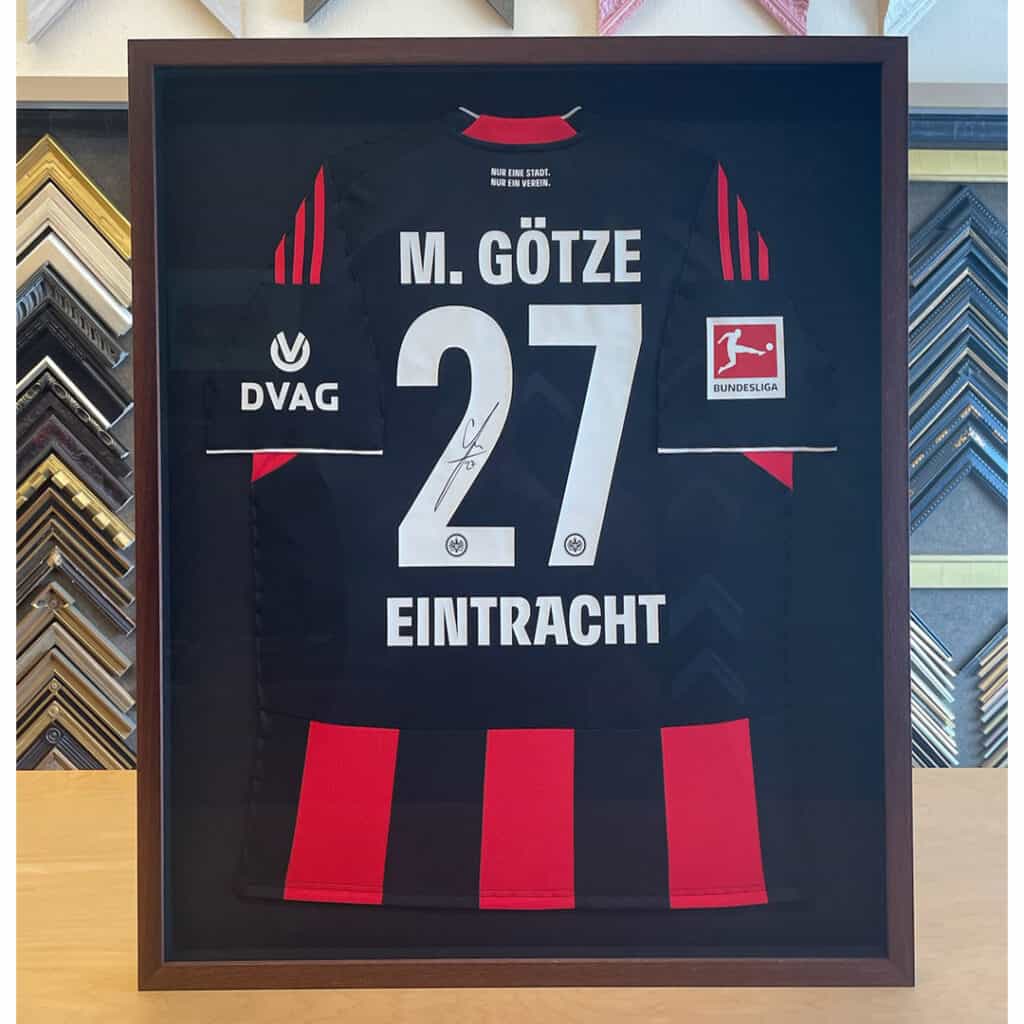

Some of the most popular—and meaningful—pieces we work with include:
- Sports memorabilia: Jerseys, gloves, helmets, and balls
- Musical instruments: Guitars, violins, or smaller instruments with sentimental value
- Textiles: Wedding dresses, uniforms, or hand-stitched pieces
- Collectibles: Vintage toys, cameras, or curated object groupings
- Heirlooms: Medals, tools, or objects passed down through generations
Each piece comes with its own challenges, from weight and depth to fragility and material sensitivity, highlighting the importance of custom framing.
How We Frame 3D Objects
Framing 3D objects isn’t simply about placing them in a box. Our custom framing designers engineer a solution that balances preservation, aesthetics, and structural integrity. This starts with a consultation with the client before any final decisions are made. Some 3D objects have many framing options available, and we always work closely with clients to ensure a collaborative approach. Below are some of the elements we take into consideration;
1. Custom Shadowboxes & Cases
We design frames with the appropriate depth to comfortably house the object without crowding it. Shadowboxes can be fully enclosed or partially open, depending on the piece and the desired look.
2. Archival Mounting Techniques
Objects are secured using conservation framing methods whenever possible. This might include hidden armatures, padded supports, or custom-fabricated mounts that hold the piece in place without adhesives or damage.
3. Material Selection
From hardwood frames to museum-grade acrylic, every component is selected with intention. For larger objects, weight becomes a critical factor, so we often recommend lighter glazing materials that still offer clarity and protection.
4. Environmental Protection
Dust, UV light, and humidity can all impact a piece over time. Proper sealing and protective glazing help create a stable environment within the frame.
When working with medium to large 3D pieces, we follow a few guiding principles. These include:
- Thinking about scale: The frame should enhance—not overwhelm—the object. Proportions matter.
- Planning for weight: Heavier objects require reinforced frames and secure hanging systems.
- Prioritizing conservation: Avoid materials or methods that could degrade the object over time.
- Considering placement: Where the piece will live (lighting, traffic, wall strength) influences design decisions.
- Keeping it intentional: Negative space, background materials, and layout should all support the story of the object.
Why Frame 3D Objects?
There’s a practical answer, and a more meaningful one. On a practical level, custom framing protects. It keeps dust off, reduces handling, and shields from environmental damage. For valuable or irreplaceable items, that protection is essential.
On a meaningful level, framing elevates. It takes something personal and gives it presence. A signed basketball becomes a conversation piece. A vintage object becomes art. A meaningful item becomes part of your environment in a deliberate, lasting way. Custom framing also helps tell a story. By choosing the right materials, layout, and presentation, we can highlight context, whether that’s the significance of a signature, the era of an object, or the memory attached to it.
We see every 3D object at Capricorn Framing as an opportunity to create something unique. If you have an object that deserves more than storage or display on a shelf, we’d love to explore what’s possible. Stop by our Presidio Heights picture framing shop or call us for a consultation.