
Designing for Warmth: Frame Finishes That Add Cozy Texture

Fall ushers in a desire for warmth and comfort. There’s a reason why pumpkin spice lattes are so popular! We see this as an opportunity to create inviting interiors: layered textiles, autumnal hues, glowing light, and seasonal art. As the season shifts toward winter, interiors transition into cozy sanctuaries.
The custom framers at Capricorn Framing keep all of this in mind when working with interior designers and homeowners, to ensure that a frame can actively enhance the warmth and texture of a space. For designers and clients alike, choosing frame finishes that complement layered materials, soft lighting, and rich tones transforms artwork from mere décor to a genuine part of the interior’s tactile story.
Why Frame Finishes Matter
When your client writes “cozy” on the mood‑board, it often means texture, depth, and invited touch. Frame finishes interact with light, surface, and material in ways that influence how a piece reads in a room. In our custom framing studio, we see the difference: a crisp metallic frame might feel clean and modern, but in a warm, layered autumn/winter interior it can feel cold, or “out of place.” Instead, the right wood tone, linen mat, or layered framing setup invites the eye to linger and to appreciate that thoughtful craft.
Wood tones: Nature’s grounded embrace
Wood is inherently warm. For fall and winter interiors, choosing medium to deeper woods — such as walnut, warm oak, mahogany, and paduk — anchors the room and plays beautifully with textiles, rugs, and natural fibers.
- Medium walnut or honey oak: complements burnt orange, rust, mustard, and olive tones. It’s a classic autumn palette.
- Maple or cerused oak: lends a Scandinavian‑rustic feel that’s perfect for layered sheepskins, knitted throws, and soft linen draperies.
- Deep chocolate or espresso: creates a rich counterpoint for lighter wall tones or artwork with high contrast, offering depth without feeling heavy.
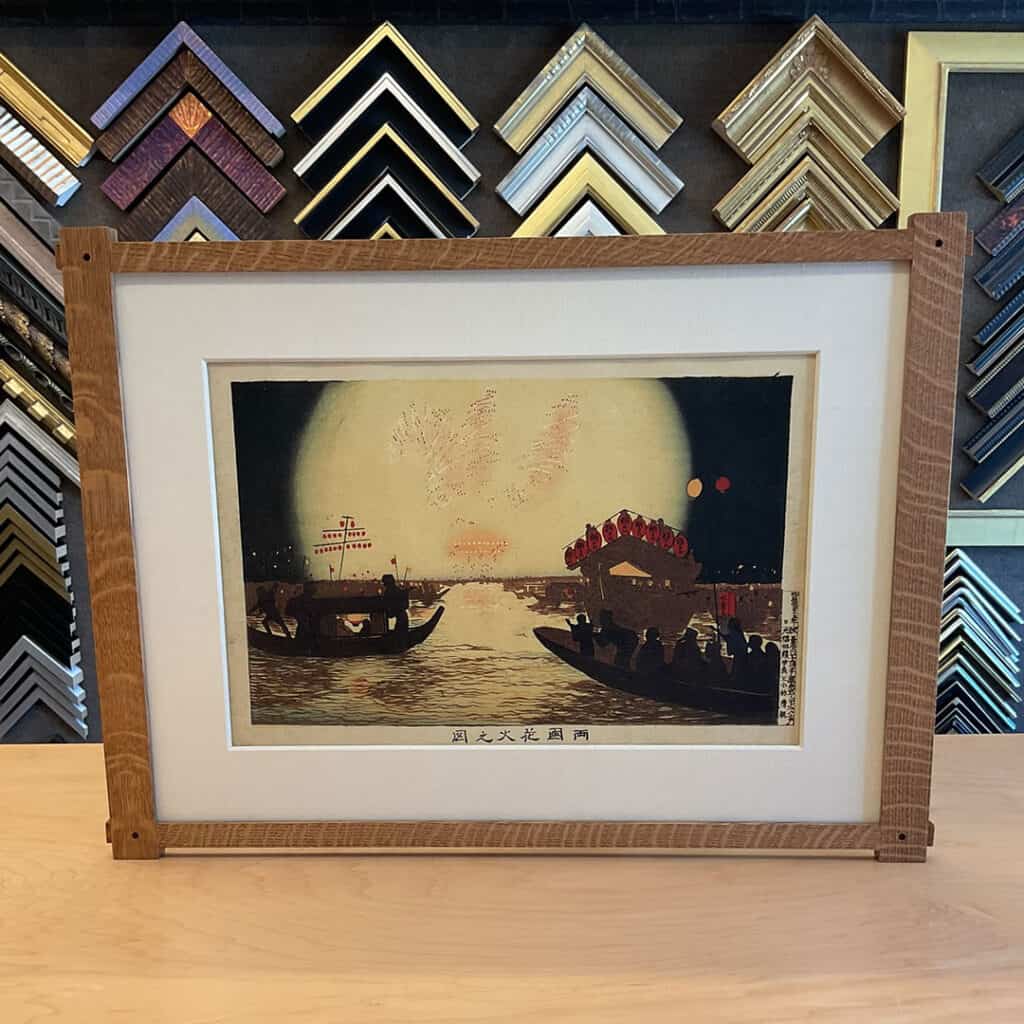

For interior designers working with us at Capricorn Framing, we follow the principle the frame should connect to the room’s material story. If the furnishings include walnut tables or oak flooring, matching or complementing those wood tones could make the frame part of the overall composition, not an afterthought. However, trying to match the frame to the furnishings exactly does not always produce the desired effect. Sometimes the frame can be intentionally different to create a bold statement.
Linen mats and soft texture
Matting is often overlooked, but in our custom framing studio it’s an opportunity to add subtle texture and warmth. Linen mats bring a tactile quality that paper mats can’t match. They respond gently to light across the seasons, and in fall/winter interiors they amplify the cozy mood.
Consider these strategies:
- A linen mat in warm oatmeal around a black‑and‑white photograph adds quiet softness.
- A double‑mat set: outer linen in heathered grey, inner flush mount in warm ivory—layering mats creates visual depth and echoes the layered textiles of the room.
- Choosing a slightly off‑white linen mat (rather than stark white) prevents the frame from feeling “in contrast” with softer wall tones.
When we collaborate with interior designers, we recommend linen mats especially when the artwork will sit near textile elements — such as rugs, throw pillows, blankets — because the mat “speaks” the same visual language as fabric. Fabric mats often elevate the overall appearance of the artwork.
Layered materials: Frames within frames
Warmth is often about layering—textile + wood + metal + light. In framing terms, that means combining frame finishes and profiles to echo that layered richness.
- A wood rail in a medium tone, paired with a gilded fillet inside the profile, adds a subtle glint—like the glow of candlelight in a cozy room—without becoming “cold.”
- Use of fabric‑wrapped liners or suede bumper liners inside deep‑set frames creates soft surfaces that invite touch. This works beautifully for 3‑D objects, keepsakes, or heritage textiles.
- Matching the frame depth to wall moldings and material layers in the room ensures the piece feels built‑in, integral. For open‑floor winter settings (e.g., living room with hearth, layered rugs, woven baskets), a deeper frame profile can “ground” the artwork.
Planning for Fall and Winter Interiors
Here are designer‑friendly pointers when specifying frames for the season:
- Look at the textiles first: What is the dominant woven texture? Is there a chunky knit throw, sheepskin rug, wool pillows? Match the frame’s tactile sense to them.
- Consider the light: Shorter daylight hours and warmer artificial light mean finishes appear differently than in summer. Wood tones look richer and deeper. Try viewing sample rails under warm LED light.
- Go tonal, not matchy: The frame doesn’t need to exactly match the wood in the room, but it should harmonize. For instance, if the dining table is blond oak, a slightly darker oak in the frame will keep it connected without “copying.”
- Mind scale: Layered interiors often include multiple focal points—artwork, the fireplace, a statement mirror, shelf vignettes. A frame that is subtly textured helps pull the art forward without overwhelming the space.
- Coordinate fabric tones: If the room has linen curtains or wool throws, a linen mat or fabric liner ties the piece into those elements, making the art feel of the space, not just added to the space.
A Design‑Partner Approach at Capricorn Framing
At Capricorn Framing we specialize in bespoke custom solutions tailored for collaborations with interior designers, architects, and design‑savvy homeowners. From home and office consultations to pick‑up and delivery services, we bring the studio to your space.
When you’re working on a fall/winter design palette and want your frames to contribute warmth, texture, and integration (rather than feel like isolated accents), we’re here as your custom framing partners. We can consult on material, finish, profile—and even installation and art‑hanging strategy.